
January 20, 2025
10 Effective Language Learning Techniques That Actually Work
Evidence-based language learning techniques that will accelerate your progress and help you achieve fluency faster.
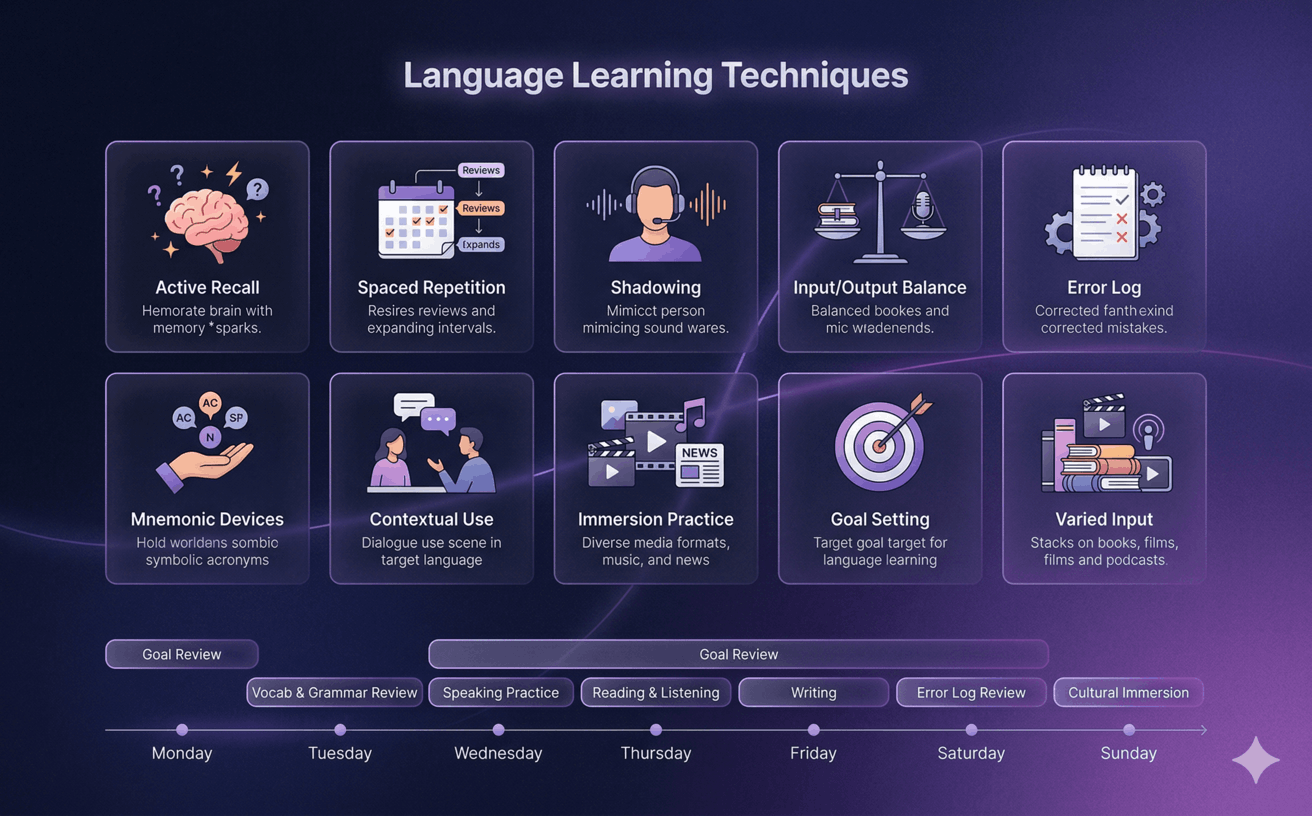
10 Effective Language Learning Techniques That Actually Work
Learning a new language can seem daunting, but with the right techniques and consistent effort, fluency is within reach. Here are ten proven methods that will accelerate your language learning journey.
1. Spaced Repetition System (SRS)
Spaced repetition is a learning technique that involves reviewing information at increasing intervals. This method is scientifically proven to improve long-term retention.
How to implement:
- Use apps like Anki or Memrise
- Review vocabulary daily
- Focus on words you struggle with more frequently
- Let the algorithm optimize your study schedule
2. Immersion Through Media
Consuming content in your target language accelerates learning and improves comprehension.
Effective strategies:
- Watch movies and TV shows with subtitles
- Listen to podcasts during commutes
- Read news articles and blogs
- Follow social media accounts in the target language
3. Active Recall Practice
Instead of passively reviewing material, actively test yourself on what you've learned.
Techniques:
- Cover answers and try to recall information
- Write summaries from memory
- Teach concepts to others
- Take practice quizzes regularly
4. Language Exchange Partners
Practicing with native speakers provides authentic communication experience and cultural insights.
Where to find partners:
- Language exchange apps (Tandem, HelloTalk)
- Local language meetup groups
- Online tutoring platforms
- University language exchange programs
5. Comprehensible Input
Focus on content that's slightly above your current level – challenging but understandable.
Implementation:
- Choose materials one level above your current proficiency
- Use context clues to understand new words
- Don't look up every unknown word immediately
- Gradually increase difficulty as you improve
6. Output Practice
Actively producing language (speaking and writing) solidifies learning.
Daily practices:
- Keep a journal in the target language
- Record voice memos describing your day
- Participate in online forums
- Practice shadowing (repeating after native speakers)
7. Contextual Learning
Learn words and grammar in context rather than isolation.
Methods:
- Learn phrases instead of individual words
- Study sentences that demonstrate grammar rules
- Create your own example sentences
- Connect new vocabulary to personal experiences
8. Focused Grammar Study
While communication is important, understanding grammar provides structure.
Balanced approach:
- Study grammar rules systematically
- Immediately apply rules in practice exercises
- Notice grammar patterns in authentic content
- Don't let perfectionism prevent communication
9. Multi-Sensory Learning
Engage multiple senses to create stronger memory connections.
Techniques:
- Listen while reading transcripts
- Write while speaking aloud
- Use gestures when learning new words
- Create visual associations for vocabulary
10. Consistent, Short Practice Sessions
Regular, brief study sessions are more effective than occasional marathon sessions.
Ideal schedule:
- 20-30 minutes daily minimum
- Break sessions into focused activities
- Maintain consistency over intensity
- Track your streak for motivation
Creating Your Personal Study Routine
Combine multiple techniques for maximum effectiveness:
Morning (15 minutes):
- Review flashcards using SRS
- Read a short news article
Commute (20 minutes):
- Listen to podcasts or audiobooks
- Practice shadowing
Evening (25 minutes):
- Grammar study and exercises
- Writing practice or language exchange
Before bed (10 minutes):
- Quick vocabulary review
- Reflect on daily progress
Measuring Progress
Track your improvement to stay motivated:
- Take periodic proficiency tests
- Record yourself speaking monthly
- Keep a learning journal
- Set specific, measurable goals
- Celebrate small victories
Common Pitfalls to Avoid
- Perfectionism: Don't fear making mistakes
- Inconsistency: Regular practice beats sporadic intensive study
- Passive learning: Active engagement is essential
- Neglecting speaking: Don't just study in silence
- Unrealistic expectations: Language learning takes time
Conclusion
Language learning is a marathon, not a sprint. By implementing these evidence-based techniques and maintaining consistent practice, you'll make steady progress toward fluency. Remember that everyone's learning journey is unique – experiment with different methods to find what works best for you.
The key is to start today and maintain consistency. Your future multilingual self will thank you!
Ready to accelerate your language learning journey? Try our AI-powered platform that incorporates all these proven techniques into a personalized learning experience.