
April 1, 2026
IELTS Listening Strategy: Beat Distractors and Capture Clean Answers
How to improve IELTS Listening by handling distractors, prediction, and note discipline under real-time pressure.
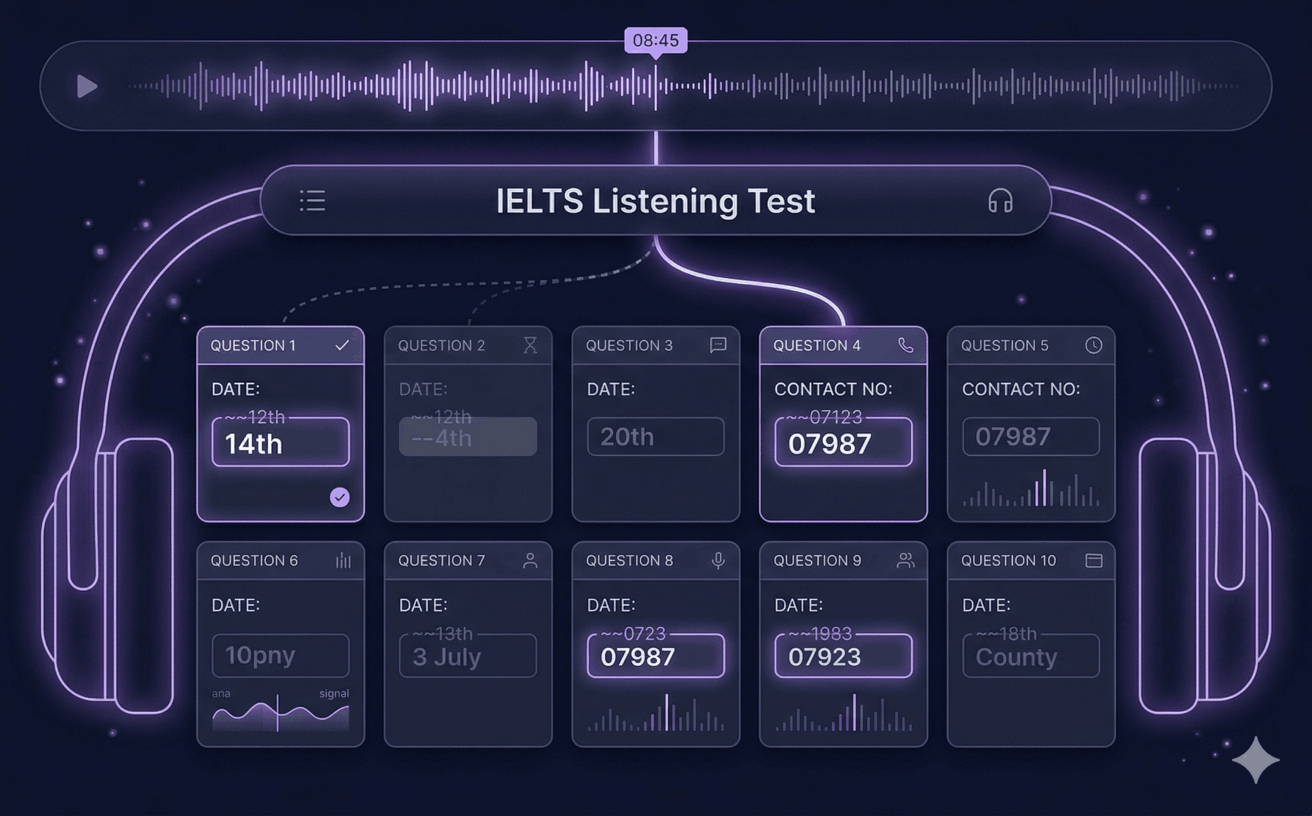
Listening scores drop for one main reason: candidates hear words but miss decision points.
Key Takeaways
- Prediction before audio increases answer capture speed.
- Distractor control is a core listening skill.
- Spelling and grammar checks protect easy points.
Common Mistakes
- Freezing after one missed answer.
- Writing words without checking form/plural.
- Trusting first answer when speaker self-corrects.
Mini Checklist
- Predict word type for each blank.
- Mark possible distractors in real time.
- Validate spelling in review window.
What Makes Listening Hard
- One-time audio flow
- Fast corrections in speech
- Distractors (speaker changes answer mid-sentence)
Before Audio Starts
Use preview time for prediction:
- What word type fits? (number, noun, adjective)
- What semantic category? (place, person, schedule)
- What plural/singular form is likely?
Prediction makes your brain faster when the real answer appears.
During Audio
- Track meaning, not isolated keywords
- Mark possible answer, but stay ready for correction
- Never freeze after missing one item
Losing 15 seconds after one miss can cost multiple answers.
After Each Section
Micro-review quickly:
- Spelling risks
- Grammar mismatch
- Plural/singular agreement
Practice Model
- Day A: full section timed
- Day B: replay and distractor analysis
- Day C: weak question-type drill
This cycle improves both reaction and precision.
Score Improvement Rule
Listening band improves when prediction + distractor control + spelling discipline work together.
Quick Quiz
1. What is a distractor in Listening?
2. Should you commit instantly to the first possible answer?
3. Why does prediction help?